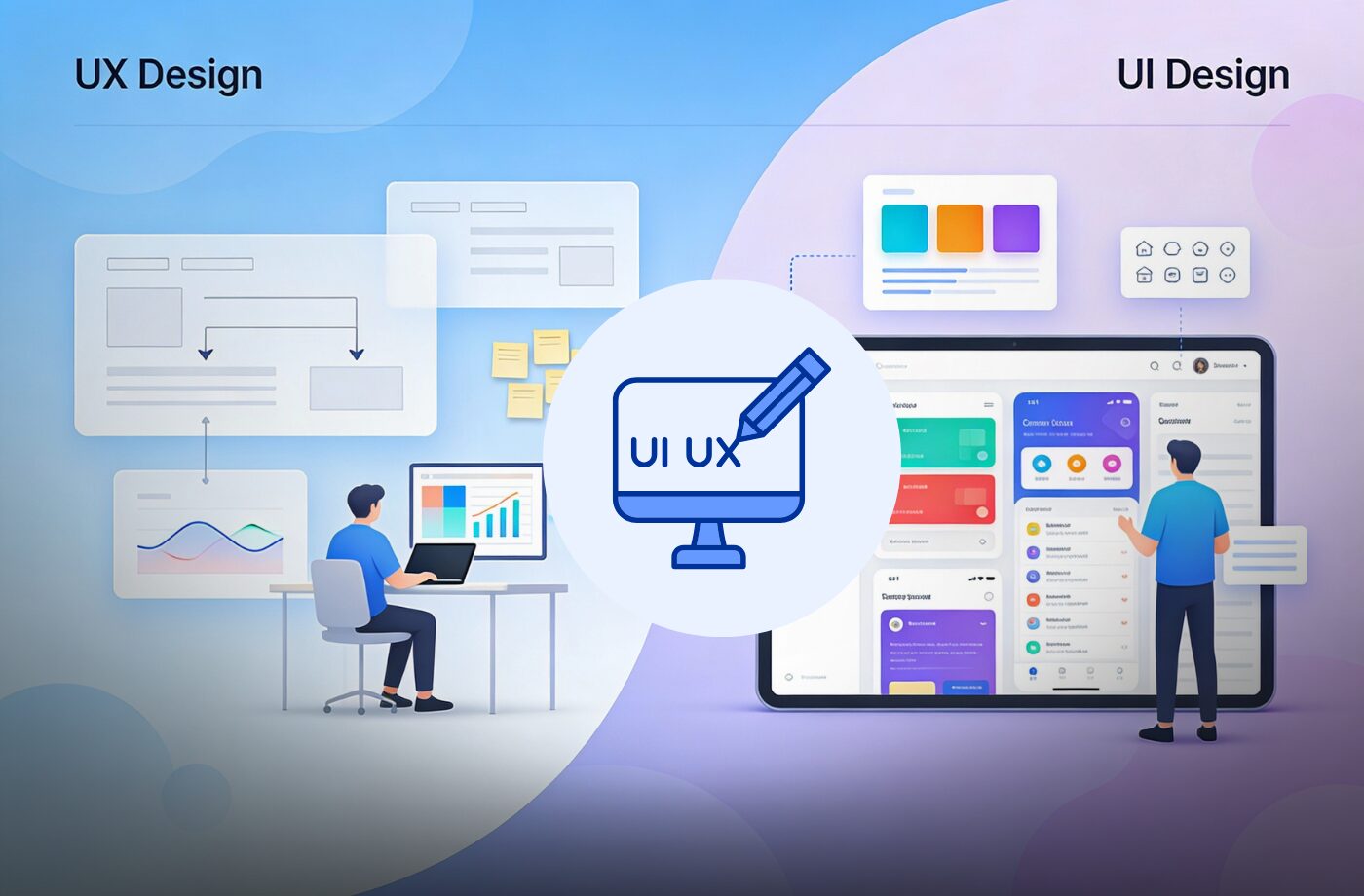
If you’ve ever wondered what is a UX designer and how that role differs from a UI designer, you’re not alone. These two job titles are often used interchangeably, yet they represent distinct responsibilities within digital product design. Companies frequently blur the lines, job listings mix expectations, and newcomers to design can feel confused about where UX ends and UI begins.
Understanding the difference matters more than ever. Whether you’re considering a career in design, hiring your first product team, or simply trying to collaborate better with designers, clarity saves time and costly mistakes. UX and UI are closely related, but they solve different problems and require different mindsets.
In this in-depth guide, you’ll learn exactly what is a ux designer, how UI designers contribute to digital products, and how the two roles work together. We’ll explore processes, tools, skills, real-world examples, career paths, and common misconceptions—so by the end, you’ll have a practical, confident understanding of UX vs UI design.
What Is a UX Designer?
To answer the core question—what is a UX designer—we need to start with user experience itself. UX stands for User Experience, which refers to how a person feels when interacting with a product, system, or service. What is a ux designer responsible for shaping that experience from start to finish.
What is a ux designer A UX designer focuses on usability, accessibility, logic, and flow. Their goal is to ensure that a product is intuitive, efficient, and satisfying to use. This applies to websites, mobile apps, software platforms, and even physical or service-based experiences.
Rather than thinking about how something looks, what is a ux designer think about how it works. They ask questions like:
- Is this easy to understand?
- Can users complete their goals without frustration?
- Does the product solve a real problem?
In short, a UX designer acts as the advocate for the user while balancing business objectives and technical constraints.
Core Responsibilities of a UX Designer
Although the exact responsibilities vary by company, most UX designers handle a similar set of tasks throughout the product lifecycle.
User Research and Discovery
What is a ux designer begin by understanding users. This often includes:
- Conducting interviews or surveys
- Observing user behavior
- Reviewing analytics or support tickets
- Creating personas based on real data
For example, if users abandon a checkout page, what is a ux designer investigates why—not just what is happening.
Information Architecture
Once insights are gathered, UX designers structure information logically. This includes:
- Organizing content
- Defining navigation systems
- Creating site maps
A well-designed information architecture ensures users can find what they need without confusion.
Wireframing and Prototyping
What is a ux designer create low- to mid-fidelity wireframes to map out layouts and interactions. These are not polished visuals but functional blueprints showing:
- Page hierarchy
- User flows
- Interaction logic
Interactive prototypes are often used to test ideas before development begins.
Usability Testing and Iteration
Testing is central to user experience design. UX designers:
- Run usability tests
- Observe real users completing tasks
- Identify friction points
- Refine designs based on feedback
This iterative approach reduces risk and improves product quality over time.
What Is a UI Designer?
While UX focuses on experience, UI (User Interface) design focuses on presentation and interaction details. A UI designer is responsible for how a product looks and how users interact with visual elements on the screen.
UI designers ensure the interface is visually appealing, consistent, and aligned with brand identity. They translate UX concepts into polished, interactive designs that users see and touch.
If UX defines the structure and flow, UI brings it to life visually.
Core Responsibilities of a UI Designer
UI designers work closely with UX designers but approach problems from a different angle.
Visual Design and Branding
UI designers select and refine:
- Color palettes
- Typography
- Iconography
- Layout styles
Their work ensures the product feels cohesive and reflects the brand’s personality.
Interaction Design
Beyond static visuals, UI designers define:
- Button states (hover, active, disabled)
- Animations and transitions
- Micro-interactions (like loading indicators)
These details improve clarity and delight without overwhelming users.
Design Systems and Consistency
UI designers often create or maintain design systems that include:
- Reusable components
- Style guidelines
- Spacing and sizing rules
This ensures consistency across screens and speeds up development.
Developer Handoff
UI designers prepare final assets and specifications so developers can implement designs accurately. This includes pixel-perfect layouts and interaction notes.
UX Designer vs UI Designer: Key Differences at a Glance
Although UX and UI are closely related, their differences become clear when compared directly.
Focus
- UX designer: User journey, logic, and usability
- UI designer: Visual clarity and aesthetic appeal
Primary Question
- UX: “Does this work well for the user?”
- UI: “Does this look and feel right?”
Outputs
- UX: Research insights, wireframes, flows, prototypes
- UI: High-fidelity mockups, visual assets, design systems
Timing
- UX often starts earlier in the product lifecycle
- UI typically follows once structure is validated
Both roles are essential, but they contribute value in different ways.
How UX and UI Designers Work Together
In effective teams, UX and UI designers collaborate closely rather than working in isolation. Their workflows overlap, and feedback flows both ways.
A typical collaboration might look like this:
- UX designer researches and defines the problem.
- UX creates wireframes and validates flows.
- UI designer applies visual design and interaction details.
- Both review usability and refine the interface.
- Iterations continue based on testing and feedback.
When collaboration breaks down, products often look good but feel confusing—or work well but feel dull. Strong UX/UI partnerships prevent this imbalance.
The UX Design Process Explained Step by Step
Understanding the UX design process helps clarify what is a UX designer responsible for day to day.
Step 1: Research
What is a ux designer gather qualitative and quantitative data. This step prevents assumptions and ensures designs address real needs.
Step 2: Define the Problem
Insights are synthesized into clear problem statements. For example:
“Users need a faster way to compare pricing without leaving the page.”
Step 3: Ideation and Flow Mapping
What is a ux designer sketch solutions, map user journeys, and identify decision points.
Step 4: Wireframing and Prototyping
Low-fidelity designs allow quick experimentation before visual polish is applied.
Step 5: Testing and Iteration
Feedback loops refine the solution until usability goals are met.
This process is rarely linear; UX designers revisit earlier steps as new insights emerge.
Tools Commonly Used by UX and UI Designers
While tools don’t define skill, they support efficient workflows.
UX Design Tools
- Figma (wireframes and prototypes)
- Axure or Balsamiq (early concepts)
- User testing platforms
- Analytics tools
UI Design Tools
- Figma or Sketch
- Adobe XD
- Design system libraries
- Animation tools
The overlap in tools reflects the collaborative nature of UX and UI roles.
Skills Required for a UX Designer
To truly understand what is a UX designer, it’s helpful to look beyond tasks and into skills.
Analytical Thinking
UX designers analyze patterns in user behavior and translate them into actionable insights.
Empathy and Communication
Understanding user needs and explaining decisions to stakeholders is critical.
Problem-Solving
What is a ux designer rarely design for perfection; they design for constraints, trade-offs, and iteration.
Collaboration
UX work sits at the intersection of design, business, and technology.
Skills Required for a UI Designer
UI designers rely on a different but complementary skill set.
Visual Design Fundamentals
Strong understanding of color theory, typography, and layout is essential.
Attention to Detail
Small inconsistencies can break trust and usability.
Creativity Within Constraints
UI designers balance brand expression with usability and technical limits.
Collaboration with Developers
Clear communication ensures designs are implemented accurately.
UX vs UI: Career Paths and Job Titles
Career paths differ depending on focus and organization size.
UX-Focused Roles
- UX Designer
- UX Researcher
- Product Designer
- Service Designer
UI-Focused Roles
- UI Designer
- Visual Designer
- Interaction Designer
In smaller teams, one person may handle both UX and UI. Larger companies often specialize roles to deepen expertise.
Common Misconceptions About UX and UI Design
“UX Is Just Wireframes”
UX goes far beyond wireframes. Research, testing, and strategy often matter more than artifacts.
“UI Is Only About Making Things Pretty”
Good UI design improves clarity, reduces errors, and supports usability.
“One Role Is More Important”
UX and UI are interdependent. Weakness in either affects the final product.
Real-World Example: UX vs UI in Practice
Imagine a food delivery app.
What is a ux designer notices users abandon orders before checkout. Research reveals confusion around fees and delivery times. The UX designer restructures the flow to show pricing earlier.
A UI designer then improves clarity by adjusting typography, color contrast, and button styles. The result is both easier to understand and visually appealing.
Neither improvement alone would be as effective without the other.
Pros and Cons of Specializing in UX or UI
UX Design Pros
- Strong demand across industries
- Strategic influence
- Deep user impact
UX Design Cons
- Research-heavy
- Less visible output
- Stakeholder education required
UI Design Pros
- Visually creative
- Tangible results
- Clear deliverables
UI Design Cons
- Subjective feedback
- Tight brand constraints
- Less involvement in early strategy
Choosing a path depends on personal strengths and interests.
How to Choose Between UX and UI as a Career
Ask yourself:
- Do I enjoy research and problem-solving more than visual design?
- Am I comfortable presenting insights and defending decisions?
- Do I prefer structure or aesthetics?
Trying both through small projects often provides clarity. Many designers start broad and specialize later.
Pitfalls to Avoid When Learning UX or UI Design
- Copying trends without understanding users
- Skipping research to save time
- Over-polishing visuals too early
- Ignoring accessibility considerations
Awareness of these pitfalls helps designers grow faster and deliver better outcomes.
Mini-Summary: UX vs UI Differences
UX designers focus on how things work.
UI designers focus on how things look and feel.
Together, they create products that are useful, usable, and enjoyable.
Conclusion
Understanding what is a UX designer—and how that role differs from a UI designer—removes confusion and sets clearer expectations. UX designers shape the overall experience by researching users, defining flows, and validating usability. UI designers refine that experience visually, ensuring clarity, consistency, and brand alignment.
Neither role is optional in successful digital products. UX without UI lacks emotional impact, while UI without UX risks frustration. When both disciplines collaborate, users benefit—and so do businesses.
Whether you’re exploring a design career or building a product team, knowing the distinction between UX and UI empowers better decisions and stronger outcomes.