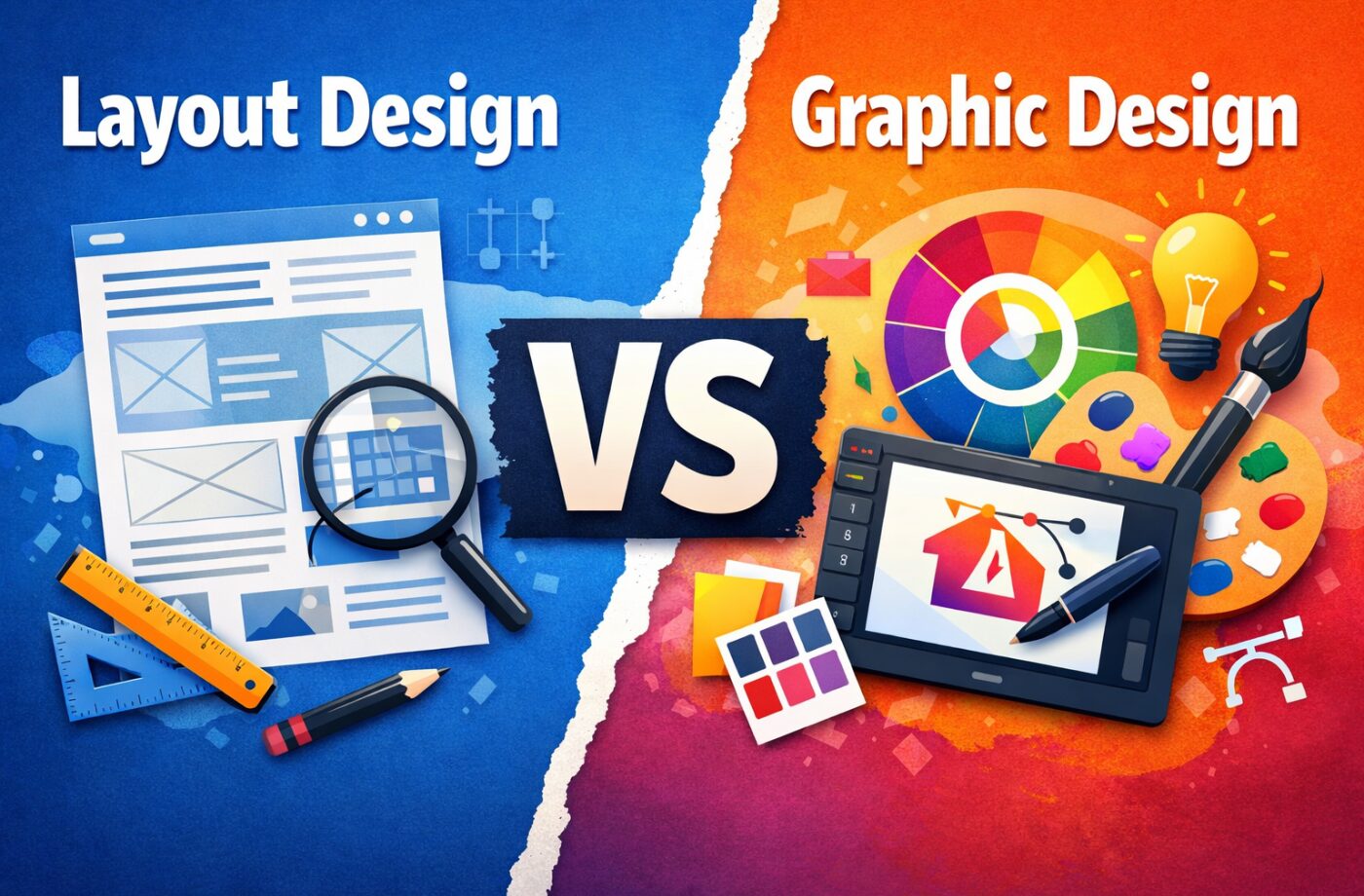
Layout design and graphic design are often used interchangeably, yet they serve different purposes in the design ecosystem. If you have ever wondered why a website looks organized but visually dull, or why a poster looks beautiful but feels confusing to read, the answer usually lies in the difference between layout design and graphic design. Understanding how this design works—and how it differs from graphic design—is essential for businesses, marketers, designers, and content creators who want clarity, usability, and visual impact.
In simple terms, this design focuses on structure, alignment, and flow, while graphic design focuses on visuals, branding, and aesthetics. Both are critical, but they solve different problems. Choosing the wrong approach can hurt readability, user experience, and even conversion rates.
In this in-depth guide, you will learn what this design really is, how it differs from graphic design, where each one excels, real-world examples, common mistakes, and how to choose the right design approach for your project. By the end, you will be able to make confident, strategic design decisions rather than relying on guesswork.
What Is Layout Design?
Layout design is the practice of arranging visual elements on a page or screen to create clarity, balance, and an intuitive reading flow. The goal of this design is not decoration but communication. It ensures that content is easy to scan, understand, and navigate, regardless of whether the medium is digital or print.
At its core, this design answers one key question: Where should each element go so the message is understood quickly and correctly?
Core Purpose of Layout Design
This design exists to guide the reader’s eye. It determines how headlines, body text, images, buttons, and white space interact. A well-structured this design reduces cognitive load and improves comprehension.
For example, in web this design, users typically scan pages in an F-pattern or Z-pattern. Layout designers use this behavior to place important information where it will naturally be noticed first.
Key Elements of Layout Design
This design relies on structure rather than decoration. Its core components include alignment, spacing, grids, and hierarchy.
- Grids and columns ensure consistency across pages
- White space improves readability and focus
- Visual hierarchy prioritizes information
- Alignment creates order and professionalism
These elements work together to make content usable before it becomes visually impressive.
Where Layout Design Is Commonly Used
This design plays a critical role in both digital and print environments. You will find it in websites, mobile apps, landing pages, newspapers, magazines, presentations, and reports. In each case, the objective is the same: make information accessible and logical.
What Is Graphic Design?
Graphic design focuses on visual expression and emotional impact. It is the art of communicating ideas through imagery, color, typography, and style. While this design structures content, graphic design gives that content a visual personality.
Graphic design answers a different question: How should this message look and feel to the audience?
Core Purpose of Graphic Design
The main goal of graphic design is to attract attention and convey meaning visually. It plays a major role in branding, marketing, and storytelling. Graphic design influences how people feel about a brand before they read a single word.
For instance, a bold color palette and sharp typography can communicate innovation, while muted tones and serif fonts may signal trust and tradition.
Key Elements of Graphic Design
Graphic design relies heavily on creative expression. Its core components include color, typography, imagery, and composition.
- Color psychology to evoke emotions
- Typography to establish tone and voice
- Images and illustrations for storytelling
- Brand identity elements like logos and icons
Unlike this design, graphic design is less about structure and more about perception.
Where Graphic Design Is Commonly Used
Graphic design is essential in logos, advertisements, social media creatives, packaging, posters, and marketing campaigns. Its success is often measured by brand recall, engagement, and emotional response rather than usability alone.
Layout Design vs Graphic Design: The Core Difference
The key difference between layout design and graphic design lies in function versus expression. This design prioritizes usability and structure, while graphic design emphasizes aesthetics and brand communication.
This design organizes information so it is easy to read. Graphic design makes that information visually compelling.
A website with strong this design but weak graphic design may be clear but boring. A design with strong graphic design but poor this design may be beautiful but confusing.
Functional vs Visual Focus
Layout design is functional by nature. It ensures the right content appears in the right place at the right time. Graphic design is expressive and emotional, shaping how users perceive the message.
User Experience vs Brand Experience
Layout design directly impacts user experience (UX). It affects navigation, readability, and flow. Graphic design influences brand experience by shaping tone, trust, and memorability.
Process-Driven vs Creative-Driven
Layout design often follows rules, grids, and usability principles. Graphic design allows more creative freedom and experimentation. Both approaches are valid but serve different objectives.
Layout Design in Web and Digital Media
In digital environments, this design becomes even more critical. Users expect instant clarity, especially on websites and mobile devices. Poor this design leads to higher bounce rates and lower conversions.
Web Layout Design Principles
Effective web this design relies on responsive grids, consistent spacing, and clear content prioritization. Elements must adapt seamlessly across screen sizes without losing structure.
Layout Design and Conversion Optimization
A strong this design can significantly impact conversions. For example, placing a call-to-action button above the fold and using white space around it increases visibility and click-through rates.
Common Digital Layout Mistakes
Some common pitfalls include overcrowding content, inconsistent alignment, and ignoring mobile-first design. These issues reduce usability even if the visual design looks impressive.
Graphic Design in Branding and Marketing
Graphic design shines in branding and promotional contexts where emotional engagement matters most. It creates a visual identity that audiences recognize and remember.
Graphic Design and Brand Identity
Brand identity depends heavily on graphic design. Logos, color systems, and typography establish consistency across all brand touchpoints. Without strong graphic design, brands struggle to stand out.
Marketing Performance and Visual Appeal
Well-executed graphic design can increase engagement, shares, and recall. In advertising, visuals often communicate faster than words, making graphic design a key driver of attention.
Risks of Over-Design
One risk in graphic design is prioritizing style over clarity. Overly decorative visuals can distract from the message if not supported by a solid this design.
How Layout Design and Graphic Design Work Together
The most effective designs combine strong this design with thoughtful graphic design. One provides structure, the other provides character.
Collaborative Design Workflow
In professional workflows, this design often comes first. Designers establish grids and hierarchy before applying colors, fonts, and imagery. This approach prevents visual clutter and ensures consistency.
Real-World Example
Consider a landing page. this design defines sections, spacing, and content order. Graphic design enhances it with brand colors, icons, and illustrations. Together, they create clarity and appeal.
Mini Summary
Layout design without graphic design feels plain. Graphic design without this design feels chaotic. Balance is the key to effective communication.
Choosing Between Layout Design and Graphic Design
The right choice depends on your goals. If clarity and usability are your priority, this design should lead. If brand recognition and emotional impact matter more, graphic design takes precedence.
When Layout Design Matters More
This design is essential for websites, dashboards, reports, and content-heavy platforms where users need to find information quickly.
When Graphic Design Matters More
Graphic design is crucial for branding, advertising, and promotional materials where visual impact drives engagement.
Practical Tip
Start with this design to ensure structure, then layer graphic design for personality. This approach minimizes rework and improves results.
Pros and Cons of Layout Design and Graphic Design
Layout Design Pros and Cons
This design improves usability, readability, and consistency. However, it can feel restrictive if over-structured or applied without creativity.
Graphic Design Pros and Cons
Graphic design enhances visual appeal and brand perception. The downside is that excessive focus on aesthetics can compromise usability if not balanced with layout principles.
Common Mistakes to Avoid
Many projects fail due to misunderstanding the difference between this design and graphic design. Common mistakes include skipping layout planning, overusing decorative elements, and ignoring user behavior.
A frequent issue is designing visuals first and forcing them into a layout later. This often results in poor alignment and cluttered pages.
Future Trends in Layout Design and Graphic Design
As digital experiences evolve, this design is becoming more data-driven, focusing on UX testing and behavior analysis. Graphic design is embracing motion, minimalism, and adaptive branding.
The future belongs to designers who understand both disciplines and know when to prioritize each.
How Success Is Measured in Layout Design vs Graphic Design
Performance Metrics for Layout Design
This design success is primarily measured through usability and performance indicators. Metrics such as readability, navigation flow, scroll depth, bounce rate, and time on page help determine whether the this design is guiding users effectively. If visitors can quickly scan content, understand hierarchy, and move smoothly between sections, the this design is performing its role correctly.
Creative Impact Metrics for Graphic Design
Graphic design is evaluated through visual and emotional outcomes rather than usability alone. Brand recall, engagement rates, social shares, and audience perception play a major role. A strong graphic design creates instant recognition and emotional connection, even before the user reads the content.
The Role of Layout Design in Scalable Digital Products
Why Layout Design Matters for Growth
As websites and digital platforms expand, this design ensures long-term consistency. A grid-based this design system allows teams to add pages, features, and content without disrupting structure. This makes scaling more efficient and cost-effective over time.
Graphic Design’s Supportive Role in Scalability
Graphic design complements this design by maintaining visual consistency through colors, typography, and branding elements. While it strengthens identity, it relies on this design to maintain order and clarity across growing platforms.
Layout Design vs Graphic Design in Content-Heavy Industries
Why Layout Design Takes Priority
Industries such as education, news, and SaaS depend heavily on this design. Users in these sectors seek clarity, speed, and logical content flow. Well-structured this design helps readers process large volumes of information without feeling overwhelmed.
How Graphic Design Enhances Content Experience
Graphic design adds value by using icons, charts, and visual cues to support comprehension. However, without strong this design, these elements can become distractions rather than helpful enhancements.
Accessibility Considerations in Layout and Graphic Design
Layout Design for Accessibility and Usability
Good this design improves accessibility by maintaining clear reading order, adequate spacing, and consistent alignment. These factors are essential for users who rely on screen readers or keyboard navigation.
Graphic Design and Visual Accessibility
Graphic design supports accessibility through color contrast, legible typography, and recognizable symbols. When paired with effective this design, it creates inclusive experiences that work for a diverse audience.
Finding the Right Balance Between Layout Design and Graphic Design
Structure First, Style Second
The most effective design approach starts with this design. Establishing structure ensures usability and clarity before visual styling is applied. This prevents clutter and improves long-term design consistency.
Why Balance Leads to Better Results
When this design and graphic design work together, the result is a design that is both functional and visually engaging. This balance improves user satisfaction, brand perception, and conversion performance across digital and print platforms.
Conclusion
Layout design and graphic design are not competitors—they are complementary disciplines that solve different problems. This design provides structure, clarity, and usability, while graphic design delivers personality, emotion, and brand identity. Understanding their differences allows you to make smarter design decisions that improve both user experience and visual impact.
Whether you are building a website, launching a marketing campaign, or creating print materials, start with a strong this design and enhance it with purposeful graphic design. When structure and creativity work together, the result is communication that is both clear and compelling.